
Helmet Cams, Antennas, and the US Open of Surfing
How do you make Wi-Fi cinematic?
That was the question I kept circling when eero and the World Surf League came to me with a brand film brief. eero is B2B filmmaking at its most challenging. The product is extraordinary. It's the backbone of connectivity at the US Open of Surfing, powering broadcast, live scoring, athlete communications, and 100,000 fans streaming simultaneously. But you cannot see it. You cannot film a signal. You cannot put a router in a hero shot and expect anyone to care.
So the question becomes: how do you build a visual language around something invisible?
Finding Drew
The solution started with a person.
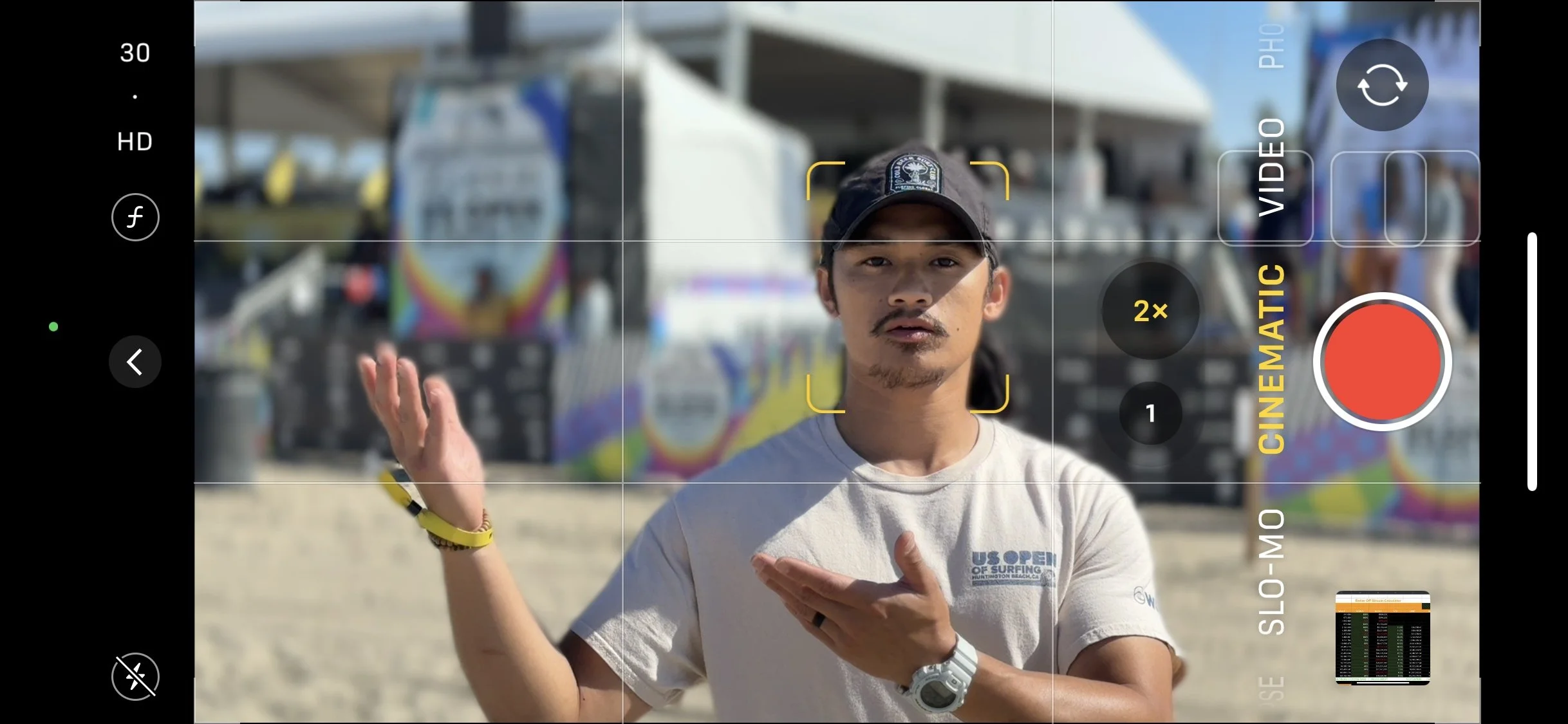
Drew is the guy who physically sets up all the WiFi infrastructure at these events. Charismatic, outgoing, completely comfortable on camera. He knows every cable, every antenna, every corner of a surf event's infrastructure. He lives in this world every day. He's the human face of eero in the field, and most people will never know he exists.
I built the entire approach around him.
Before we rolled a single frame, producer Miguel and I walked the venue. We scouted interview positions, found sight lines that would let us move fast when the action started. On a live shoot like this, that prep work is everything. You can't stop the US Open of Surfing to reset a camera angle. You can't ask 100,000 fans to hold still while you find your light. You get what you get, and the only reason you get anything good is because you did the work before the event started.
The POV Rig
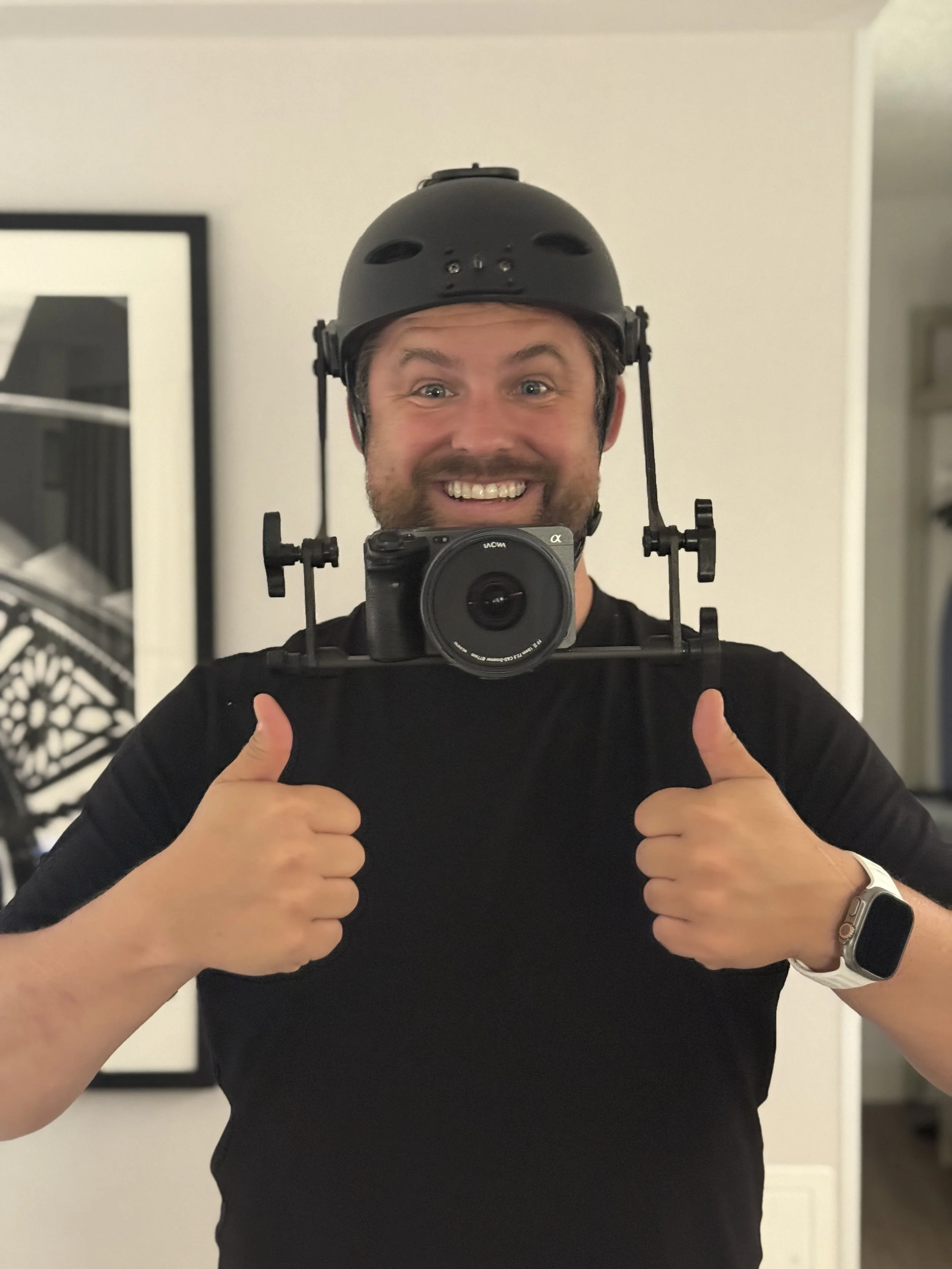
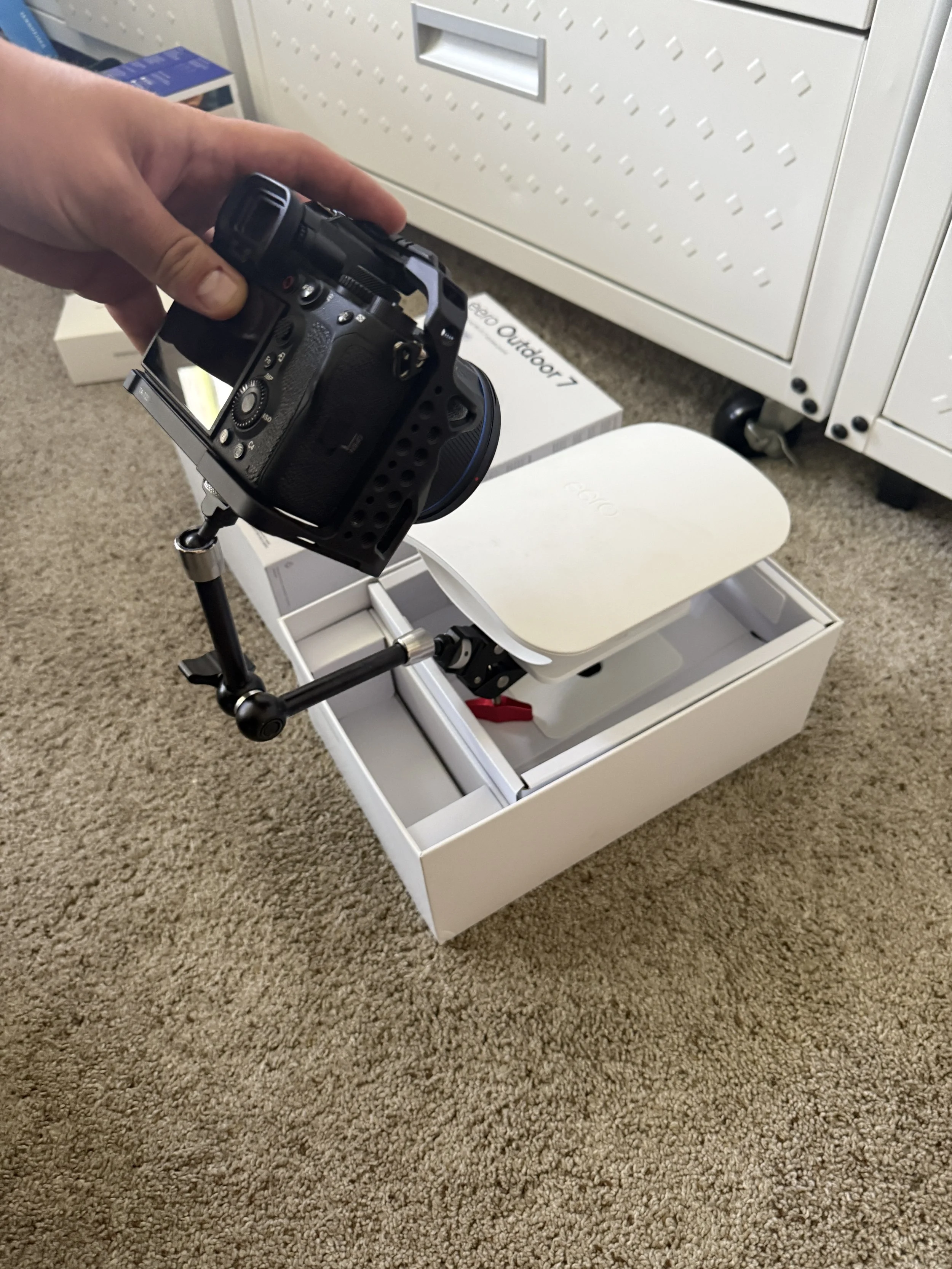
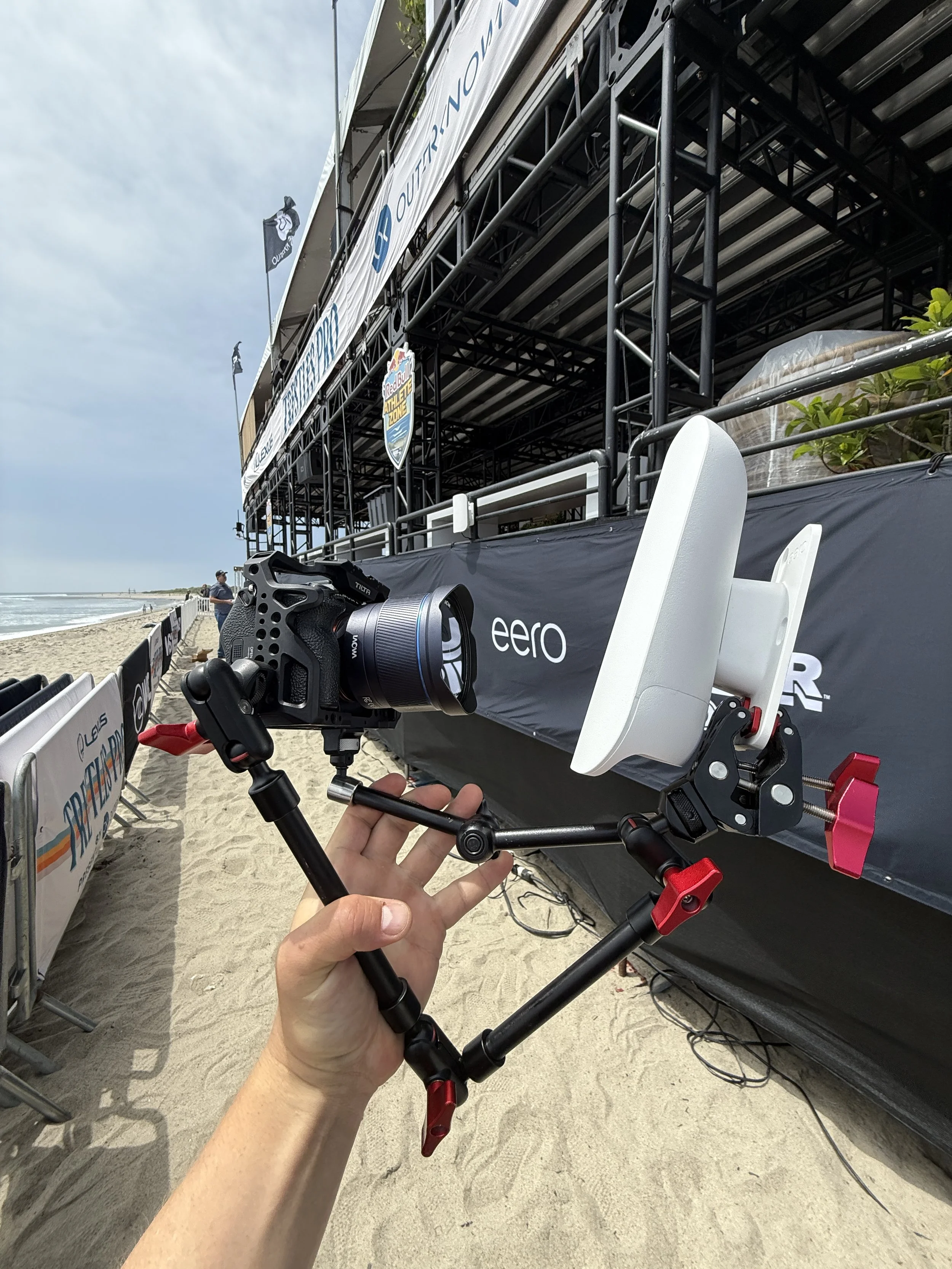
I strapped a camera to Drew's helmet and put the viewer directly in his perspective.
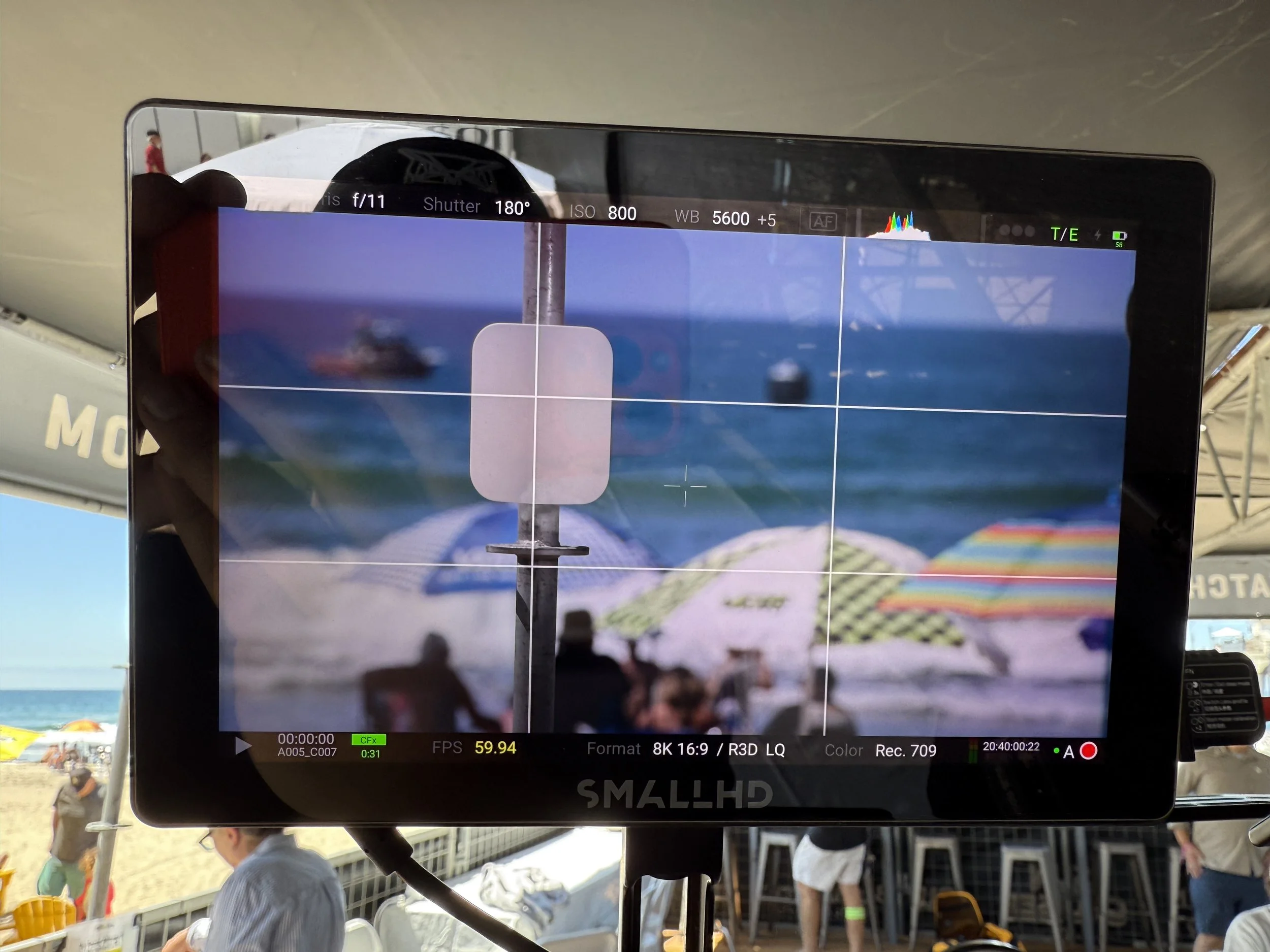
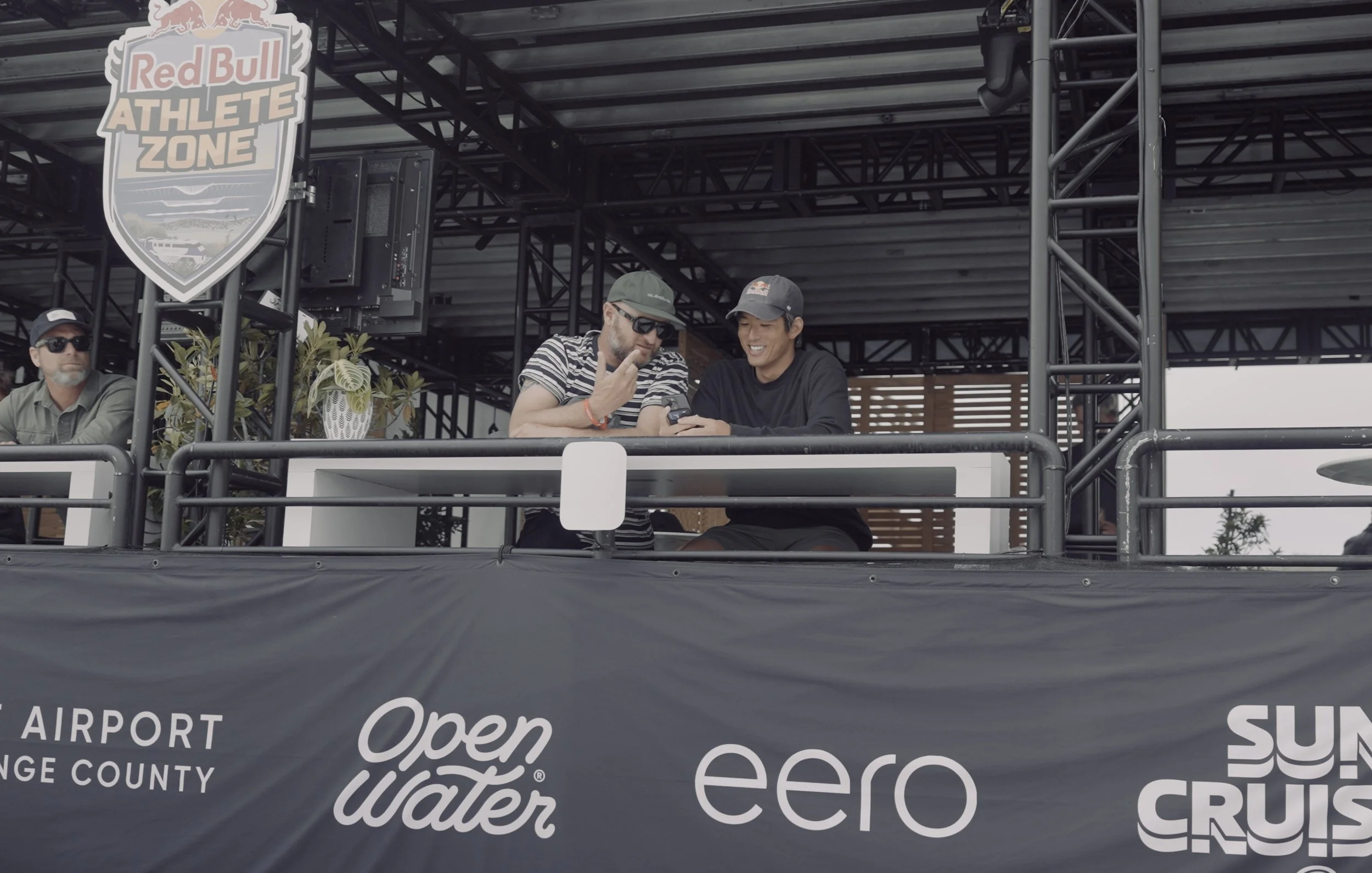
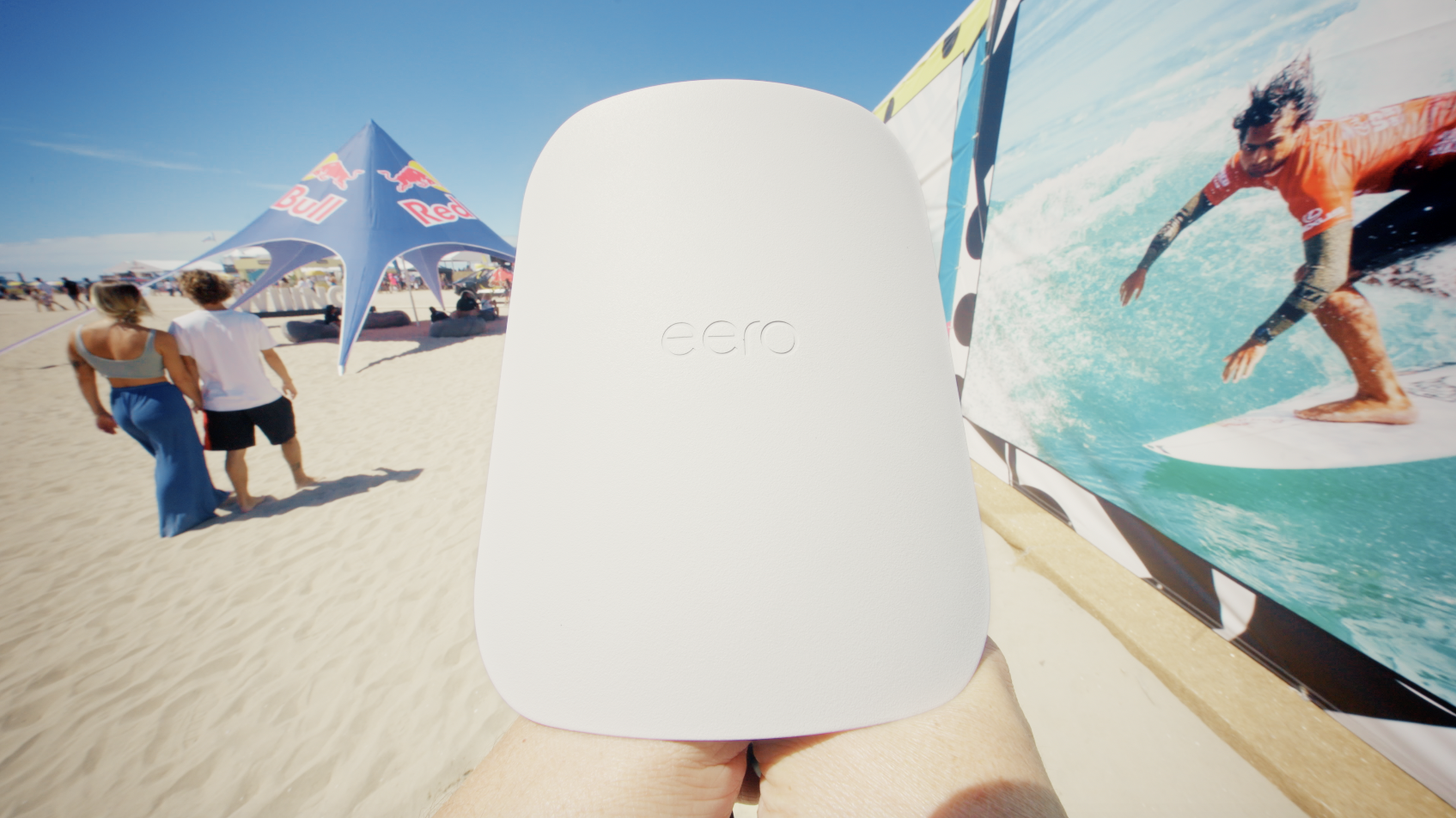
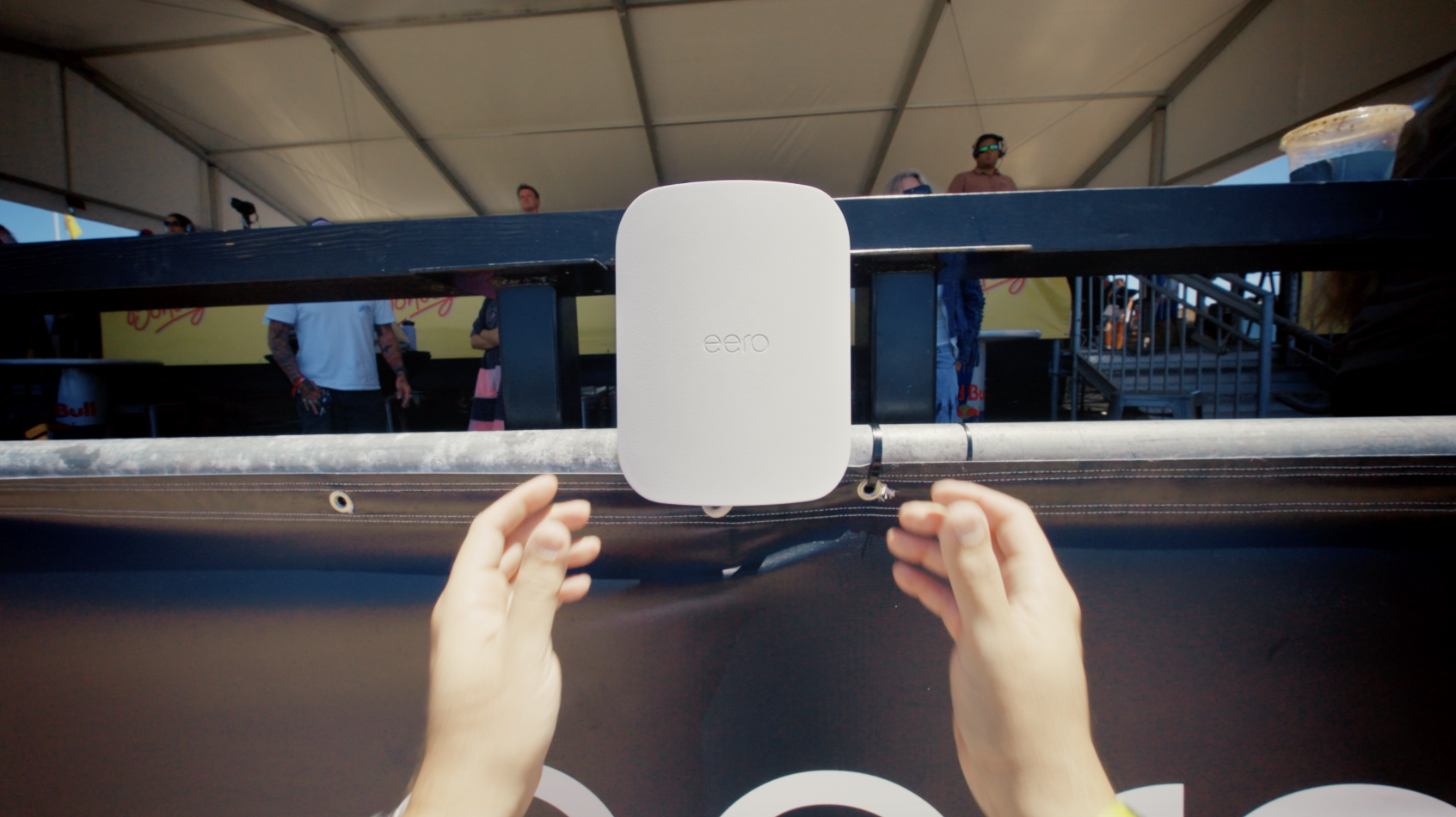
You're not watching someone set up WiFi. You're walking through it with the person who does it at every event. The beach. The broadcast trucks. The Red Bull athlete zone. 100,000 fans streaming on their phones. Drew holds the eero device as it moves through real locations. Center frame. The world flowing around it.
POV filmmaking done right means the camera disappears, and what's left is the moment.
This solved every brief requirement at once. It made the product visible without a traditional product shot. It let Drew be exactly who he naturally is. And it made the day genuinely fun to shoot. For the crew, for Drew, and for anyone watching.
The AI Paper Cut
This project had six interviews. That's a lot of material to sort through before you even think about structure.
On the edit side, I used AI to transcribe all six and do a paper cut. Identifying key sound bites, mapping narrative structure, pulling the strongest moments before I ever opened a timeline. The AI got me roughly 80% of the way there. Then I filled in the b-roll, went back and forth with the client, and finished the edit exactly how they wanted it.
That's creative efficiency in commercial video production. Not laziness. The AI handled the mechanical work. I handled the creative decisions. The client got their edit on time and on brief, and the story held together because the structure was solid before I ever made a cut.
Deliverables Built Into the Plan
One of the things I take seriously in action sports brand content is delivering assets clients can actually use across every platform. For the eero + WSL project, that meant a full suite from a single shoot day.
A main two-minute edit in 16:9 for YouTube, website, and presentations. A 60-second horizontal cut for web and pitches. A 30-second horizontal cut for in-room presentations. A 60-second vertical cut for Instagram Reels and TikTok. A 30-second vertical cut for Stories and paid social. And a safe zone overlay version showing exactly how content sits inside platform windows.
Safe zones for social media matter more than most clients realize. Every platform has UI elements that cover parts of your video. The like button. The caption area. The progress bar. If you don't plan for safe zones before the shoot, your key visuals get buried under interface when the post goes live. I deliver an overlay version so the client can see exactly what viewers will see on every platform. No surprises.
I think about distribution and format before I ever sit down to edit. That's what makes the difference between content that looks intentional everywhere and content that had to be cropped and re-cropped until it barely worked.
What B2B Filmmaking Actually Requires
eero taught me something clean. The product doesn't have to be the hero if the world it enables is compelling enough. Make the world cinematic, and the product inherits that energy by proximity.
That reframe is available on any brief where the product itself is hard to film. Ask not "how do I film this product?" but "what does this product make possible, and how do I put the viewer inside that?"
The answer for eero was a helmet cam, a charismatic field engineer, and the biggest surf event in the country. The answer for your brand will be different. But the question is always the same.
Working on a B2B or action sports brand film project? Let's connect.